1

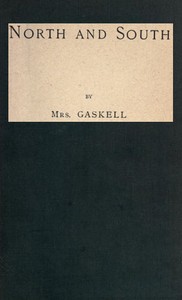
North and South — Edition Insights
(0 User reviews)
88
Project Gutenberg
2003
Didactic fiction; Young women -- Fiction; Bildungsromans; Mothers and daughters -- Fiction; Children of clergy -- Fiction; Social classes -- Fiction; England, Northern -- Fiction
Readers of public-domain and historical texts
Project Gutenberg digital edition
en
Edition facts
Words: 190,038
Reading time: 827 min
Text sections: 53
Source:
Project Gutenberg record #4276
Elizabeth Gaskell's novel contrasts rural southern life with industrial northern England through Margaret Hale's move to Milton. The excerpts reveal tensions between domestic comfort and social upheaval, religious doubt, and family secrets, focusing on Margaret's evolving perspective.
Editorial Edition Score
4.9/5
★★★★★
★★★★★
Calculated from edition completeness, EPUB availability, text structure and catalogue metadata. Not a user rating.
Edition quality
The opening chapter of North and South establishes a world of leisured domesticity: Edith lies curled on a crimson damask sofa, a vision of white muslin and blue ribbons, while Margaret broods silently on her future in Helstone parsonage. Yet the narrative quickly pivots to unease. Margaret brings home a drunken weaver, and her father mutters, “a drunken infidel weaver!”—a phrase that condenses class and religious friction. The Hale household is shadowed by a deeper anxiety: Frederick, Margaret’s brother, lives in exile, and his potential return is fraught with legal danger. Gaskell weaves these threads through dialogue and interior reflection, making the domestic sphere a site of moral and social negotiation.
Domestic Interiors as Social Barometers
The back drawing-room in Harley Street is described with precise material details—crimson damask, white muslin, blue ribbons—that signal a world of comfort and aesthetic order. Yet this setting is immediately undercut by Margaret’s silent brooding and Edith’s trivial concerns about piano tuning in Corfu. Later, in Milton, the Hale home becomes a space of negotiation: Margaret must balance her mother’s illness, her father’s religious doubts, and the intrusion of a weaver whose presence unsettles domestic norms. Gaskell uses interiors to reflect social positions and emotional states, from the soft, enclosed world of Edith’s nap to the tense, watchful atmosphere of Mrs. Hale’s sickroom, where Dixon’s protective authority rivals Margaret’s.
Voices of Unease: Dialogue and Dissonance
Conversations in the excerpts are marked by interruptions, half-spoken fears, and conflicting priorities. Margaret’s father responds to the weaver with a muttered exclamation that reveals his dismay at both drunkenness and unbelief. Mrs. Hale’s anxiety about Frederick surfaces in a dreamlike repetition: “If he should be recognized! If he should be taken! If he should be executed!” The dialogue between mother and daughter is a series of near-misses—Margaret urges haste, Mrs. Hale wishes she had not written. Dixon’s brisk, practical tone cuts through the tension, offering a counterpoint of decisive action. These exchanges convey the strain of managing secrets and the difficulty of aligning different perspectives within a single household.
The Weight of Unspoken Plans
Margaret’s inner life is revealed through what she does not say. She broods over her future role as “only daughter in Helstone parsonage,” but her plans are interrupted by the weaver’s arrival and the urgent letter to Frederick. The narrative notes that “the more she tried to think of something—anything besides the danger to which Frederick would be exposed—the more closely her imagination clung” to the risk. This pattern of suppressed worry and forced composure recurs throughout the excerpts. Margaret’s silence in the face of her mother’s fears, her father’s disapproval, and the weaver’s presence suggests a character who absorbs conflict rather than resolving it openly. The novel’s tension arises from these withheld reactions and the slow accumulation of pressures that demand response.
Readers attentive to patterns of speech and silence will find that Gaskell builds her drama through small, telling details: a father’s muttered dismay, a mother’s recurring nightmare, a servant’s confident management. The novel rewards careful attention to how characters negotiate what can and cannot be said. The excerpts offer a concentrated view of these dynamics, inviting speculation about how Margaret’s quiet watchfulness will meet the more overt conflicts of industrial Milton.
There are no reviews for this eBook.
Reader reflection
What did you think of this book?
Answer a few questions and save a private reflection on this device.
Your progress
0
/
10
2
Was reading this book enjoyable?
3
How likely are you to recommend this book?
4
How demanding did the text feel?
5
How clearly were the main ideas presented?
6
Is this a title worth rereading?
7
How distinctive were its ideas or approach?
8
Did you gain anything practical from the text?
9
In one sentence, what did you learn?
10








Zachary Moran - 4 weeks ago
Thomas Collins - 3 weeks ago
William Zimmerman - 2 weeks ago